
Mindfulness Heals, Your Competition Can Help, and Chess Players Throwing Hands

In today’s edition of Burke’s Bits:
Mindfulness And Pain Management
A Marketing Tip
What I’m Reading
From the Research File
Pun of the Day
==============================
Mindfulness is the ability to be fully present, aware of where we are and what we’re doing, and not be overly reactive or overwhelmed by what’s going on around us. Look at it as the stillness/peace in a storm.
About 14 years ago I had someone ask me about mindfulness.
They posed this question to me during a discussion about dealing/coping/living with physical pain:
Can you explain to me why I need mindfulness? After all, it feels bad to notice that you’re in pain. Why would you purposely try to be aware of it? I don’t understand why you would want to do that.
My Answer:
I used mindfulness for pain management. It helped me to develop skills to cope with physical pain so I wasn’t debilitated by it.
Between 1999 - 2011 I lived with active Crohn’s Disease. From ‘99 - ‘01 I was unable to eat solid foods, experienced debilitating and horrific pain throughout my body, and had no desire to be on pain medication. After experimenting with different mind/body techniques, I found that deep meditation was the most helpful.
As with all things, it’s better to know the truth because you know what you’re dealing with. And, that’s what mindfulness did for me – it let me see/feel the truth of the pain, where it was coming from, and then as I “took control” of it in my mind, to reduce its power to stop me from leaving the house and participating in life.
What this looked like is deep meditation. Body scan meditation from head to toe every night. Addressing each body part as it’s own entity…seeing it in my mind, relaxing it, understanding it’s role in my body, seeing it healed and working correctly.
It helped me to eventually become pain-free and medication free (one of many tools I used … diet, exercise, hobbies, prayer, etc.) by 2011 I weaned off all medications and haven’t had debilitating pain or a need for medication since.
So noticing that you feel bad or that you feel physical pain simply means you’re seeing the truth of things and can then do something about it.
If you ignore the bad feeling or physical pain then you prolong the experience of feeling bad and the pain.
You see, when you think you ignore you don’t ever reduce it or stop it because it is always present.
It’s better to be able to cope than to deny and suffer the consequences that result in more pain.
==============================
A Marketing Tip
Here’s the thing most marketers in a business (and as solo biz owners) skip… not because it’s hard, but because it’s revealing.
Get honest on paper.
What do you actually do well for your clients or employer? Not the fluffy brochure version. The real, roll-up-your-sleeves benefits.
Now look sideways for a second. What are your competitors doing that you’re not? (Yes, I know… we’d all prefer not to peek. Peek anyway.)
Here’s where it gets interesting:
Which of those advantages could you do better, faster, simpler… or with less friction?
Because “better” doesn’t always mean bigger. Sometimes it means easier to say yes to.
Now take a different angle.
Think about the businesses you love dealing with. The ones you go back to without thinking twice. Your go-to vendor, your favorite supplier, that one company that gets it.
Why?
Not ten reasons. One.
Chances are it’s something clean and specific.
“They’re fast.”
“They don’t make me jump through hoops.”
“They fix things without drama.”
That’s their edge. Their quiet superpower.
Now… could you borrow that?
(Go ahead. Nobody’s filing a report.)
Finally, look at the heavy hitters in any field. The ones who make it look easy. They’re usually known for one thing. One clear benefit that sticks.
That’s not an accident. That’s focus.
When you figure out your version of that—and actually lead with it—you stop blending in with everyone else who “also does great work.”
And funny enough… that’s when people start noticing.
==============================
What I’m Reading
📚 Carry the World by Susan Fanetti
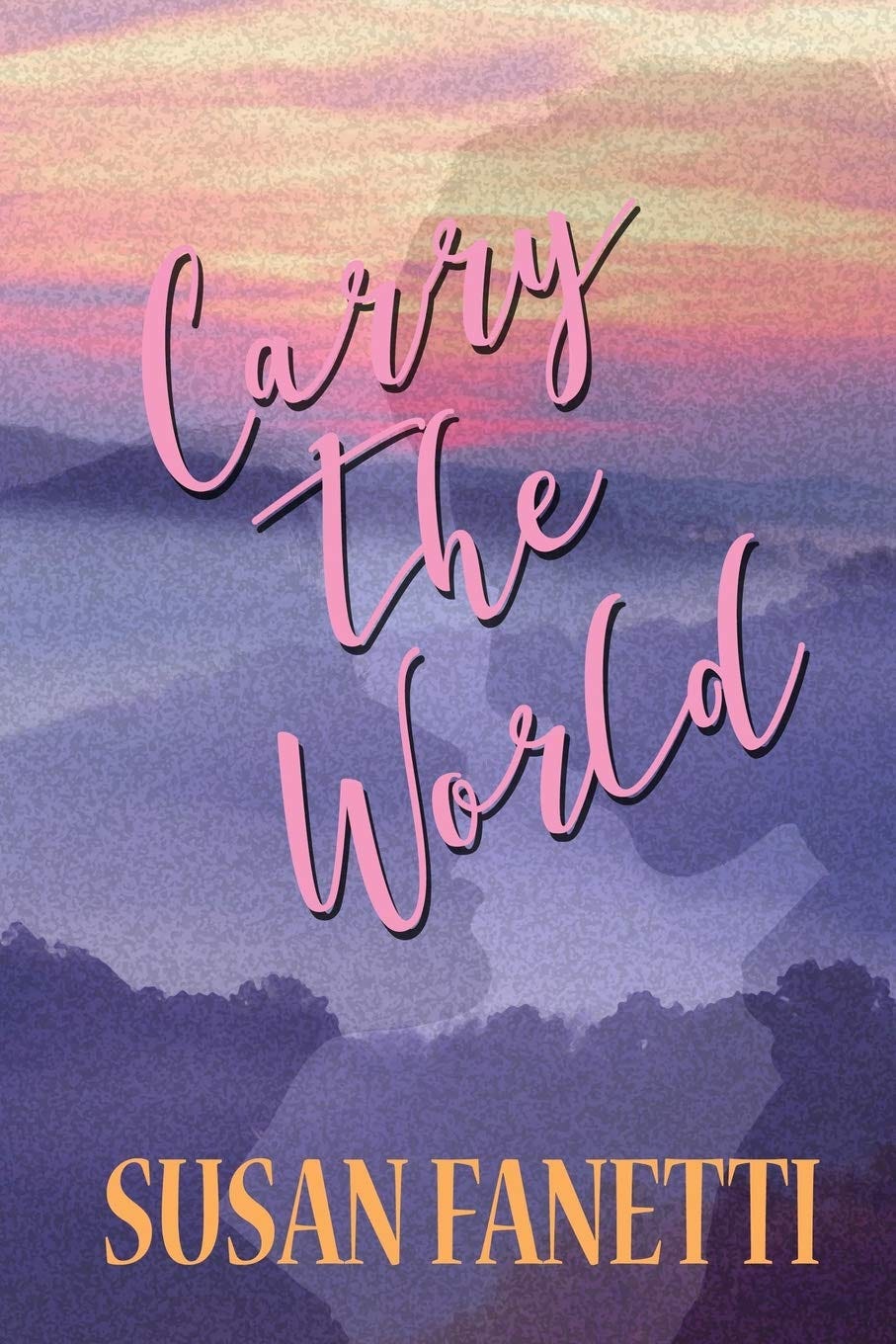
This was our Book Club read from October 2025, and it’s a well-written historical novel that includes a lovely romance. I’ll be honest, I went in expecting “historical romance.” You know the type. Pretty setting, a little longing, tidy ending, close the book, move on with life.
Nope. This one lingers.
Set in Depression-era Appalachia, the story follows Ada, a widow who moves back home with her aging parents to care for them and keep the small farm going. She takes a job as a Pack Horse librarian, riding books deep into the mountains to people who have little access to… well, anything. And somewhere along those rugged trails, she crosses paths with Jonah, a widower raising two children in near isolation.
Now here’s where it could have gone predictable. Thank goodness it didn’t.
The romance shows up slowly, like trust does in real life. These are two people carrying grief like it’s set in their bones, figuring out if there’s room for something more without betraying what they’ve lost. And that slow-burn, layered build is exactly what we in my Book Club enjoy.
And the setting? It’s not just a backdrop, it’s practically a character.
The weight of those mountains is real. The scarcity. The grit. The way people made do with what they had and somehow still managed to create community, connection, and moments of unexpected tenderness. This world was vividly written, like stepping through a door into 1937 and staying awhile.
But what stayed with me most wasn’t just Ada and Jonah.
It was the idea at the heart of it all: carrying the world to someone who doesn’t have access to it.
Books, yes. But also kindness. Attention. Care.
This story is full of that quiet kind of giving. The kind that doesn’t announce itself but changes everything anyway.
Final verdict?
It’s a love story. It’s about survival. It’s about second chances. About the fragile, stubborn way people find their way back to life after loss.
And it’s one I’m really glad our Book Club chose, because it’s the kind of book you don’t just read…
You carry it with you for a while.
==============================
From the Research Files
aka random bits of info you may or may not be able to use in your life
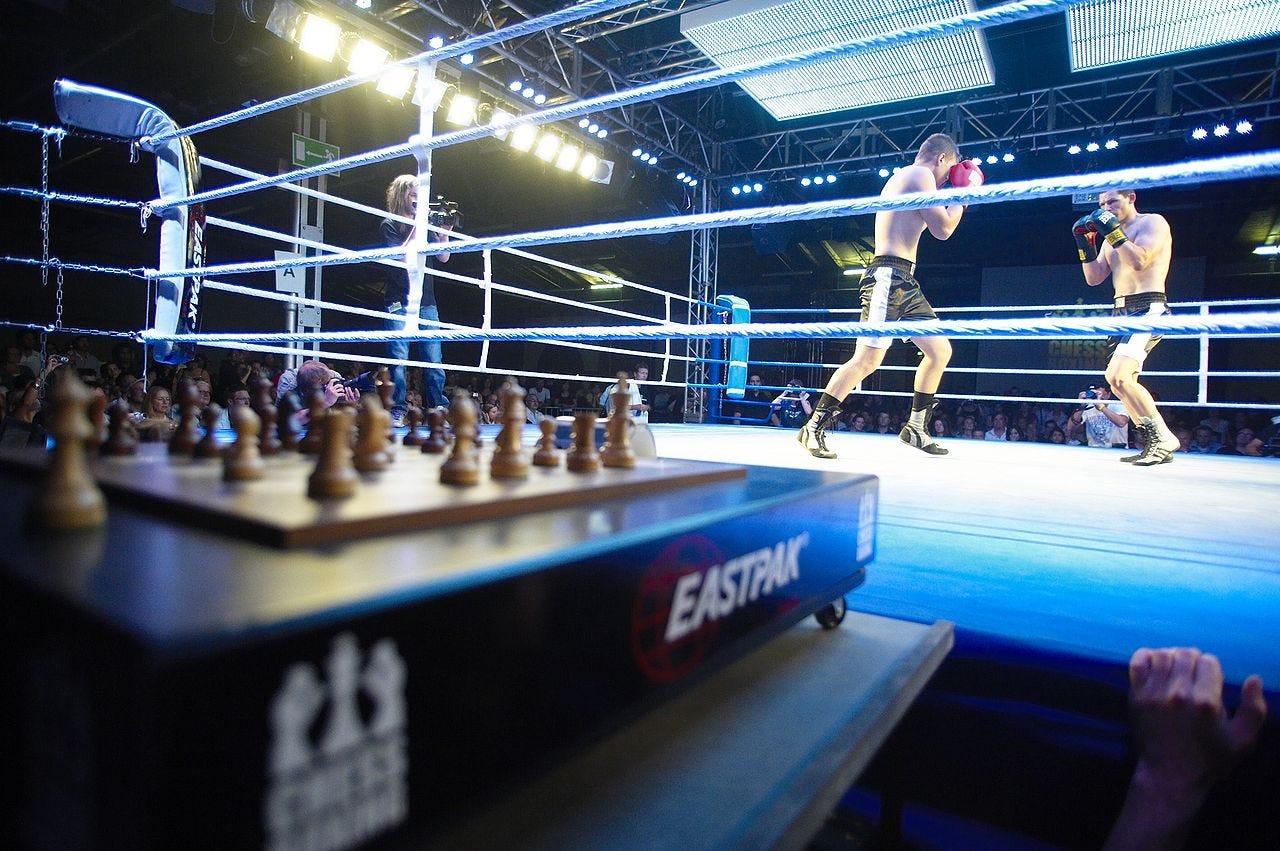
In 1992, a French comic book artist looked at chess… looked at boxing… and thought, “Yes. These belong together.”
That artist was Enki Bilal, who introduced the idea in his graphic novel Froid Équateur. (Wikipedia)
Because apparently, moving a bishop just wasn’t stressful enough without the possibility of being punched in the face.
The concept stayed in the realm of “that’s… creative” until a Dutch performance artist, Iepe Rubingh, decided to make it real. In 2003, he staged the first official match, alternating rounds of chess and boxing like some kind of intellectual Fight Club.
Yes, alternating.
Three minutes plotting your opponent’s downfall…
Three minutes attempting to physically accelerate it.
Win by checkmate.
Win by knockout.
It’s now a legitimate sport with organizations, championships, and competitors who are equally comfortable calculating moves and dodging punches.
Which raises an important question:
Are you trying to outthink your opponent…
or just gently rearrange their ability to think at all?
Either way, somewhere out there, someone just whispered:
“Knight to E4.”
…and then got punched for it. ♟️🥊
==============================
Pun of the Day
Did you hear about the woman who loved making archery supplies? Every day she went to work, she quivered with joy!
🤣😂🤣😂🤣😂
==============================
If you like this newsletter and want to support it, there are 5 ways you can do it. PICK ONE right now before you forget:
This is the paid tier… where the fluff gets cut, the real playbooks show up, and the insights can make you money.
Click here to buy me a cup of coffee
Hit reply and say hello.
Recommend me to your company to write their newsletter.
Comment your thoughts below
With Gratitude,
Charlene Burke
If you think someone else would enjoy reading my random thoughts and shared every Sunday